

The Future of Medicine Is Personal: How DNA Testing Could Transform Your Health

Imagine walking into your local GP surgery in the near future. Instead of a rushed appointment and a standard prescription, your doctor opens a detailed digital picture of your biology — your own genetic blueprint. They are not simply asking, “What symptoms do you have?” They are beginning to ask a deeper question: “How does your body work?”
This is one of the most exciting changes happening in modern healthcare. For decades, much of medicine has been based on the “average patient.” A treatment is tested on large groups, approved for the general population, and then prescribed to individuals who may respond very differently. One person improves quickly. Another gets side effects. Another notices almost no benefit at all.
But human beings are not average. Your genes, metabolism, immune system, gut microbiome, lifestyle, stress levels, sleep, diet, and environment all help shape your health. This is why healthcare is gradually moving toward Personalised Medicine, also known as Precision Medicine or Genomic Medicine — a future where treatment is increasingly tailored to the individual.
The NHS is already using genomic testing in areas such as rare diseases and cancer, and wider applications are being explored through the NHS Genomic Medicine Service and new Genomic Networks of Excellence.
Solving Some of Medicine’s Biggest Mysteries
For years, many chronic conditions have involved guesswork, frustration, and trial and error. DNA testing will not solve everything, but it is beginning to provide valuable clues.
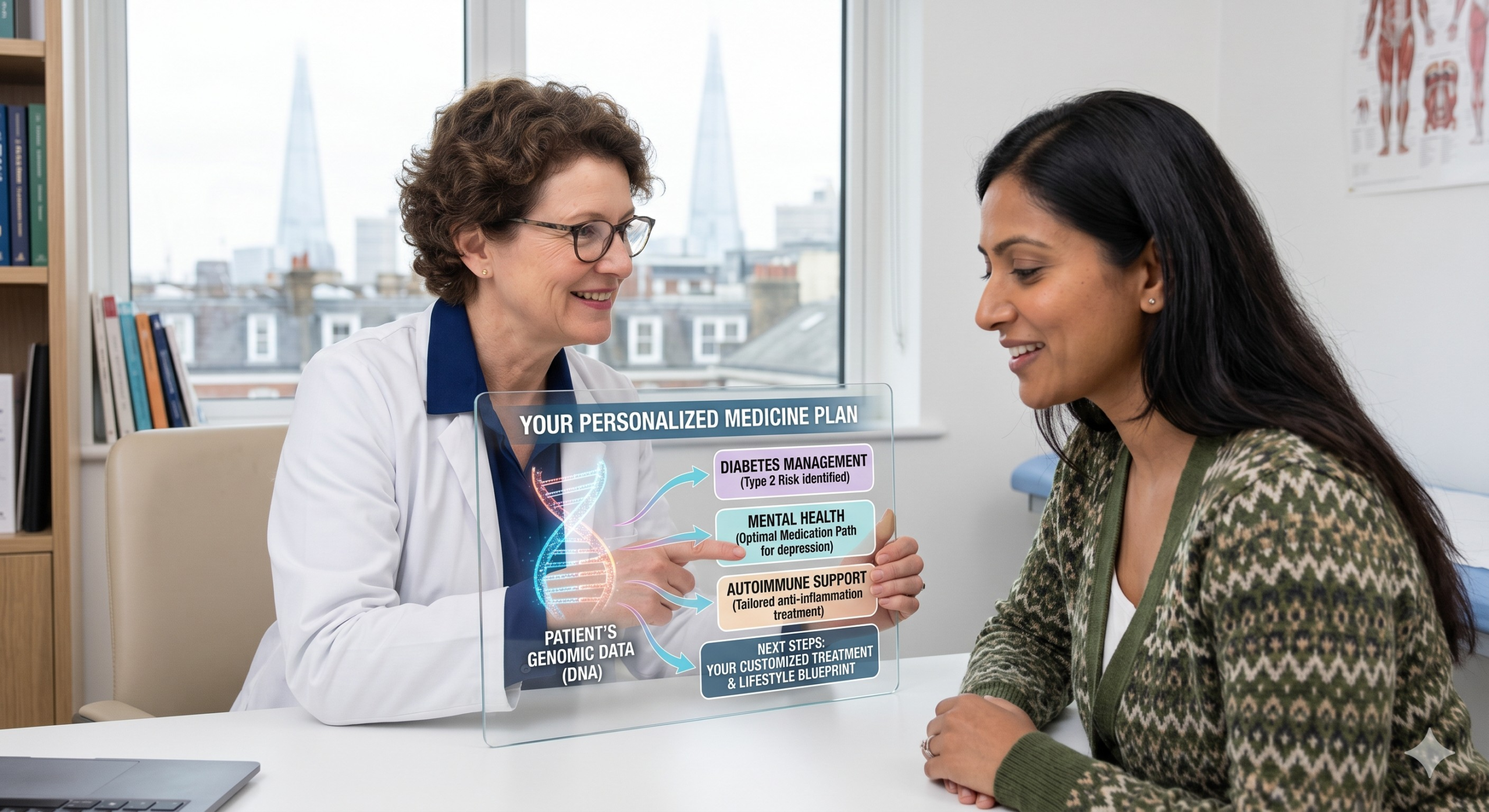
Diabetes & Weight Struggles
Many people blame themselves for weight gain, sugar cravings, tiredness after meals, or difficulty controlling blood sugar. But it is not always simply about “willpower.”
Some people are genetically more prone to insulin resistance, poor glucose handling, or increased risk of Type 2 Diabetes. DNA testing may help identify these tendencies earlier, allowing more personalised nutrition, exercise, and prevention strategies.
This does not mean genes are destiny. Lifestyle still matters enormously. But understanding your genetic tendencies may help explain why one diet works brilliantly for one person and fails for another.

Depression & Mental Health
Finding the right antidepressant can sometimes feel like a guessing game.
A field called pharmacogenomics studies how your genes affect the way your body processes medication. Some people break down certain medicines too quickly. Others process them too slowly, increasing the risk of side effects.
DNA-guided medication testing may help doctors choose safer and more suitable options, reducing some of the trial and error. However, it cannot perfectly predict which antidepressant will work for every person. Mental health is complex, and medication response is influenced by many factors, not genes alone.
Autoimmune Conditions
Conditions such as rheumatoid arthritis, lupus, psoriasis, and inflammatory bowel disease are often difficult to manage because the immune system is involved in highly complex ways.
Precision medicine is helping researchers and doctors understand which immune pathways are overactive in different people. This may allow more targeted treatments that calm harmful inflammation without unnecessarily suppressing the whole immune system.
Autoimmune disease is rarely caused by one simple genetic “fault.” It usually involves a combination of genetic risk, immune triggers, infections, gut health, stress, hormones, and environmental factors.
The “Always Tired” Mystery
Many people feel constantly exhausted even when they believe they are sleeping enough.
Sometimes the cause is obvious: low iron, low Vitamin B12, thyroid problems, poor sleep, stress, blood sugar imbalance, infection, depression, or overwork. But in some cases, genetics may provide additional clues.
Certain genetic variations may influence how efficiently the body processes nutrients such as folate, B vitamins, or glucose. Some people may also have differences in methylation pathways, which are involved in many biochemical processes.
DNA testing alone should never be used to diagnose chronic fatigue. But when combined with proper medical investigation, it may help build a fuller picture of what is happening inside the body.
When Will This Become Normal in the UK?
The future is closer than many people realise — but it is not fully here yet.
NHS Genomic Medicine
The NHS already offers genomic testing for many rare diseases, certain cancers, and selected treatment decisions. For example, genomic testing is increasingly being used to guide safer and more personalised cancer treatment.
There are also major NHS projects exploring wider use of genomic medicine, including newborn screening research for rare genetic conditions.
However, routine DNA-guided healthcare for common conditions is not yet available to everyone through the NHS. It is more realistic to say that personalised medicine is expected to expand significantly over the next decade, rather than promising that it will soon be free for all.
Private DNA Testing in the UK
If people do not want to wait for wider NHS access, private DNA testing services are already available across the UK.
Current pricing can vary significantly depending on the depth of analysis and whether medical interpretation is included:
- Basic wellness DNA kits typically start from around £80–£250
- Pharmacogenomic medication-response testing often ranges from £200–£500
- Advanced clinical genomic panels can cost several hundred pounds
- Whole genome sequencing generally ranges from approximately £1,000–£2,500+
Recent UK examples show wellness DNA tests around £79–£179, while private whole genome sequencing and clinical panels can range from over £1,000 to several thousand pounds depending on the provider and level of interpretation.
Prices continue to fall as technology improves.
However, not all tests are equally useful. Simple consumer “wellness reports” may provide only limited information, while clinical-grade genomic testing interpreted by qualified healthcare professionals is usually far more meaningful and medically reliable.

Your DNA Is a Blueprint — Not a Destiny
Even the best genetic technology cannot replace healthy living.
Your genes are like a blueprint, but you still have to build the house. Having “good genes” does not mean you can ignore your lifestyle. And having genetic risks does not mean you are doomed.
This is where epigenetics becomes so fascinating. Diet, sleep, exercise, stress, smoking, pollution, sunlight, relationships, and emotional wellbeing can all influence how the body functions.
In simple terms: your daily habits matter.
Science may show you the map, but you are still the driver.
The Lifestyle Foundations That Still Matter Most
No matter what your DNA says, some principles support almost every human body.

1. Eat More Whole, Unrefined Plant Foods
A diet rich in vegetables, fruits, legumes, nuts, seeds, whole grains, herbs, and fibre helps support the gut microbiome, blood sugar balance, immunity, and inflammation control.
Your gut bacteria are like hidden health managers. Feed them well, and they help support digestion, immunity, mood, and metabolism.
2. Move Your Body Regularly
Exercise is not just for muscles.
Movement improves circulation, insulin sensitivity, mitochondrial energy production, mood, sleep, and cardiovascular health. It helps the body use glucose more efficiently and supports mental wellbeing.
Regular movement remains one of the most powerful forms of preventive medicine.
3. Protect Your Mind
The body listens to the mind.
Chronic stress can raise cortisol and increase inflammatory pressure inside the body. Positive thinking, gratitude, faith, purpose, forgiveness, rest, and strong relationships can all support better health.
A peaceful mind is not a luxury. It is part of the healing environment your body needs.

4. Drink Pure Water
Every cell in your body depends on water.
Proper hydration supports circulation, digestion, kidney function, temperature regulation, and normal cellular activity. Before chasing complicated health solutions, many people need to start with the basics — including drinking enough clean (properly filtered) water.
The Universal Supplement Stack
DNA testing may help fine-tune individual needs, but many people still benefit from correcting common nutritional gaps — especially in the UK, where sunlight exposure can be limited for much of the year.
Commonly used most important supplements include:
- Vitamin D3 — essential for immunity, mood, bones, and general wellbeing
- Magnesium — supports sleep, relaxation, muscle function, and stress balance
- Vitamin B12 — vital for energy production, nerves, and red blood cells
- Good-quality Multivitamin (A-Z Multivit) — helps cover nutritional gaps
- Super Greens — concentrated plant nutrients and antioxidants
- Black Seed Oil — traditionally used to boost immunity, fight pathogens, support inflammation balance and respiratory health
- Ashwagandha — an adaptogenic herb often used for stress resilience
- Alpha Lipoic Acid — an antioxidant involved in glucose metabolism and cellular energy production

Supplements should never replace a healthy diet or medical care. Quality, dose, suitability, and medication interactions all matter.
The Real Takeaway
The DNA revolution is not science fiction anymore.
It is already beginning to change cancer care, rare disease diagnosis, medication safety, and preventive health. In the coming years, it may help doctors understand patients with far greater precision than ever before.
But the most powerful future of healthcare will not come from technology alone.
It will come from combining the best of modern genomic science with the timeless foundations of health: nourishing food, regular movement, proper rest, clean water, emotional balance, spiritual peace, and wise daily choices.
Your DNA may reveal the blueprint.
But your lifestyle helps decide how that blueprint is expressed.
Science is giving us the map.
But you are still the driver.
This article is for educational and informational purposes only and does not constitute medical advice. Always consult a qualified healthcare professional before making changes to medication, supplements, diet, or major lifestyle practices.