
Low Blood Pressure
Slawomir Gromadzki, MPH
Introduction
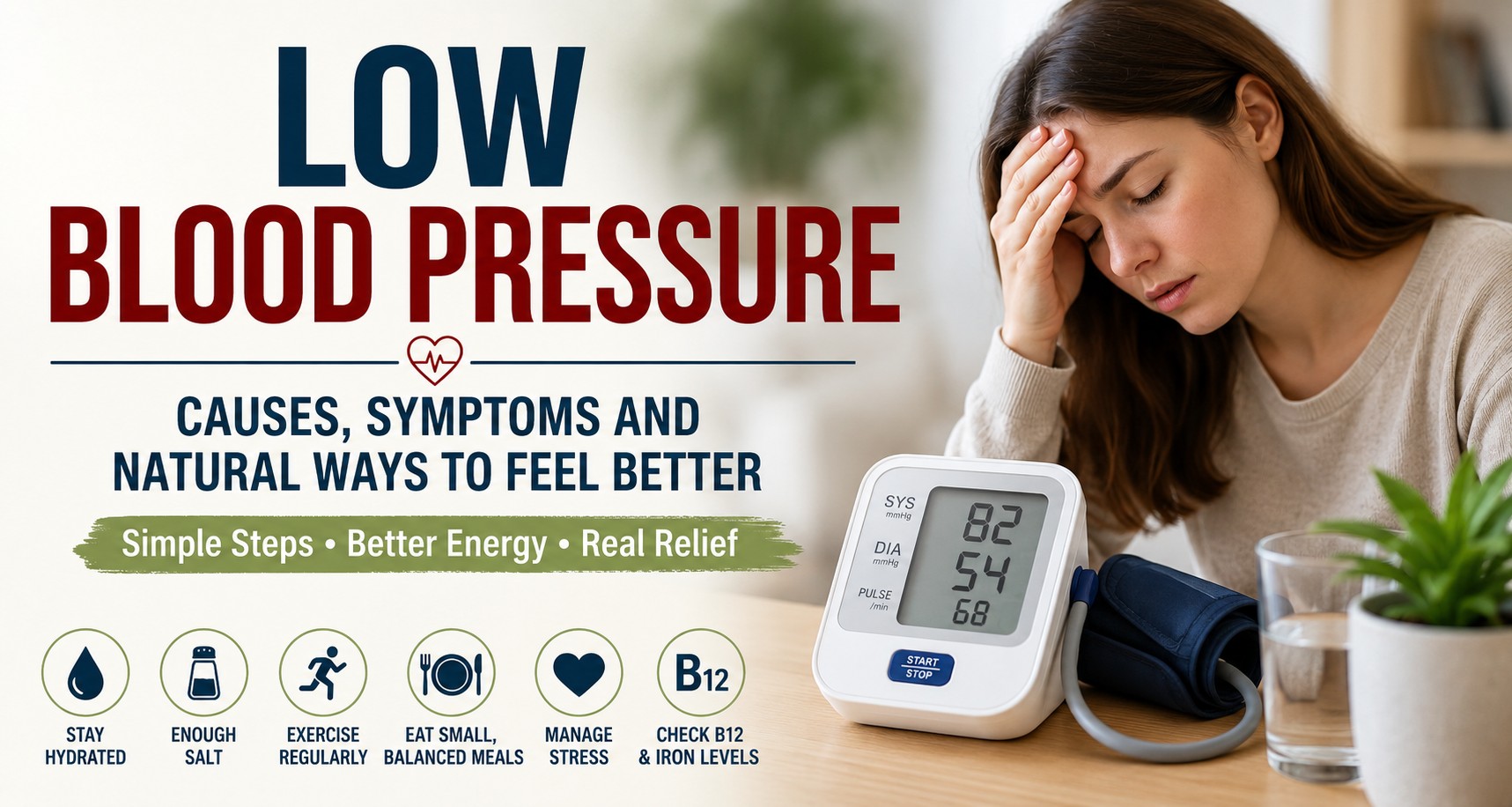
High blood pressure receives far more attention, yet blood pressure that falls too low can also interfere with daily life. Some people naturally have low readings and remain energetic and well. For others, insufficient blood flow to the brain and other organs may lead to weakness, tiredness, dizziness, blurred vision or fainting.
The NHS generally defines low blood pressure, or hypotension, as a reading below 90/60 mmHg. However, the reading should always be considered alongside the symptoms. One person may feel perfectly healthy at 90/60, while another person with the same result may become dizzy whenever they stand.
Common Signs of Low Blood Pressure
Symptoms may include:
• light-headedness or dizziness
• unusual weakness or fatigue
• blurred, dimming or fading vision
• nausea
• difficulty concentrating
• fainting
These problems are often most noticeable after getting up from a chair or bed. This is known as postural or orthostatic hypotension. When it happens repeatedly, it can also increase the likelihood of falls and injuries, particularly among older people.
Possible Causes
Low blood pressure is not a disease in itself. It may be a person’s normal, healthy state, or it may be a sign that something else needs attention.
For this reason, the most useful question is not merely, “How can blood pressure be raised?” but “What is making it low?”
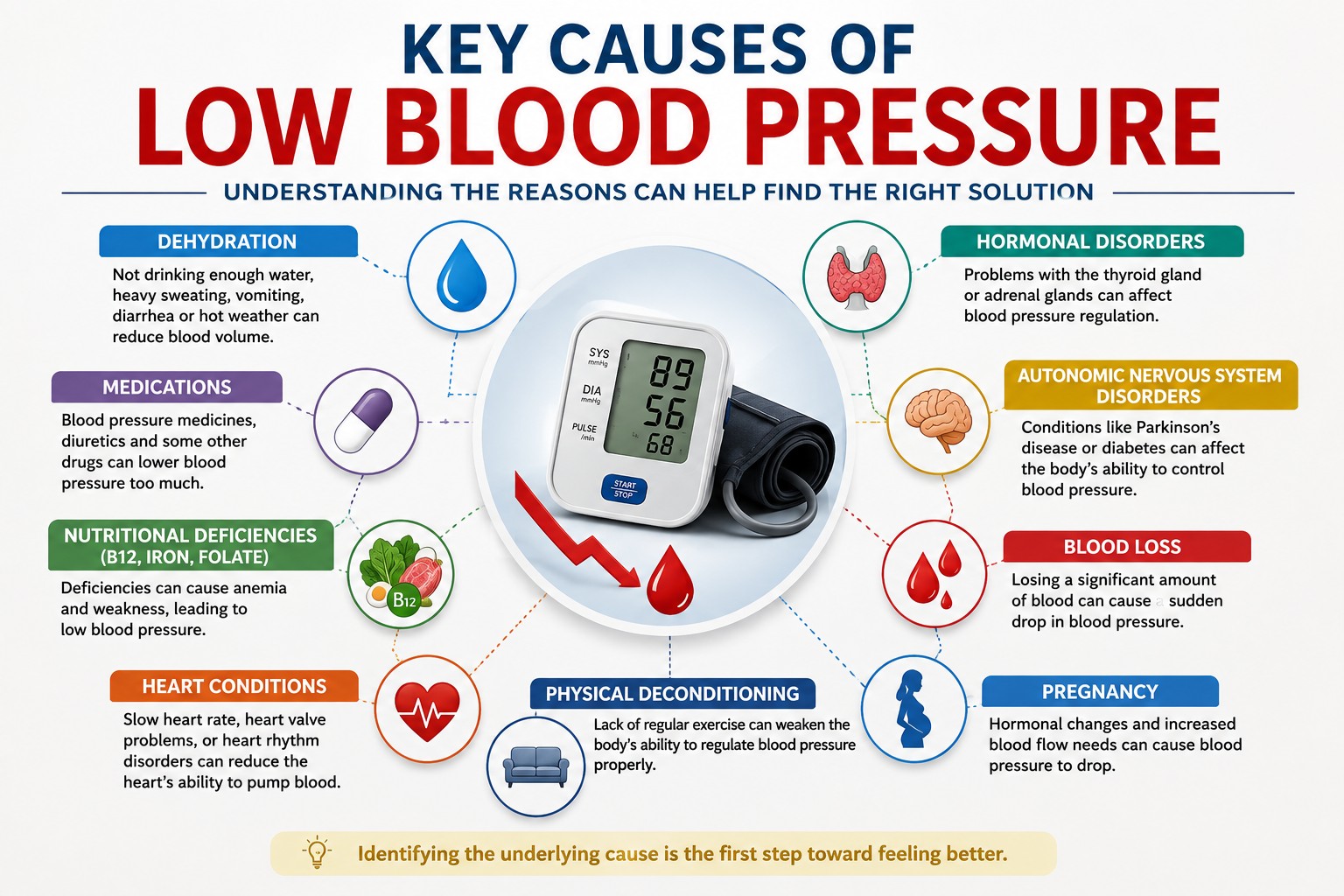
Dehydration and Loss of Fluids
Inadequate drinking, hot weather, heavy sweating, diarrhoea or vomiting can reduce the volume of blood in circulation. When less fluid is available, blood pressure may fall.
Medication
Medicines prescribed for hypertension, diuretics and certain treatments for heart disease or other conditions can sometimes lower blood pressure more than intended.
Medication should not be stopped without medical advice, but the dose or combination may need reviewing.
Anaemia and Nutritional Deficiencies
Deficiencies of vitamin B12, iron or folate can cause anaemia and contribute to fatigue, weakness, dizziness and reduced exercise tolerance.
Vitamin B12 deficiency is especially significant because it may also disturb the autonomic nerves responsible for maintaining blood pressure during a change of posture.
Heart Conditions
A very slow heartbeat, certain abnormal heart rhythms, heart-valve disorders or reduced pumping strength may prevent the circulation from maintaining adequate pressure.
Thyroid or Adrenal Disorders
Hormonal problems involving the thyroid or adrenal glands can sometimes cause low blood pressure.
Poor Autonomic Regulation
On standing, the body should automatically narrow certain blood vessels and adjust the heart rate so that enough blood continues to reach the brain.
If this autonomic response is impaired, blood pressure can fall abruptly.
Blood Loss
Substantial internal or external bleeding lowers circulating blood volume and may cause severe hypotension. Sudden low blood pressure associated with suspected blood loss requires urgent medical assessment.
Physical Inactivity
After prolonged inactivity or bed rest, the heart, blood vessels and muscles may become less effective at adapting to an upright position and physical activity.
Practical Ways to Support Healthy Blood Pressure
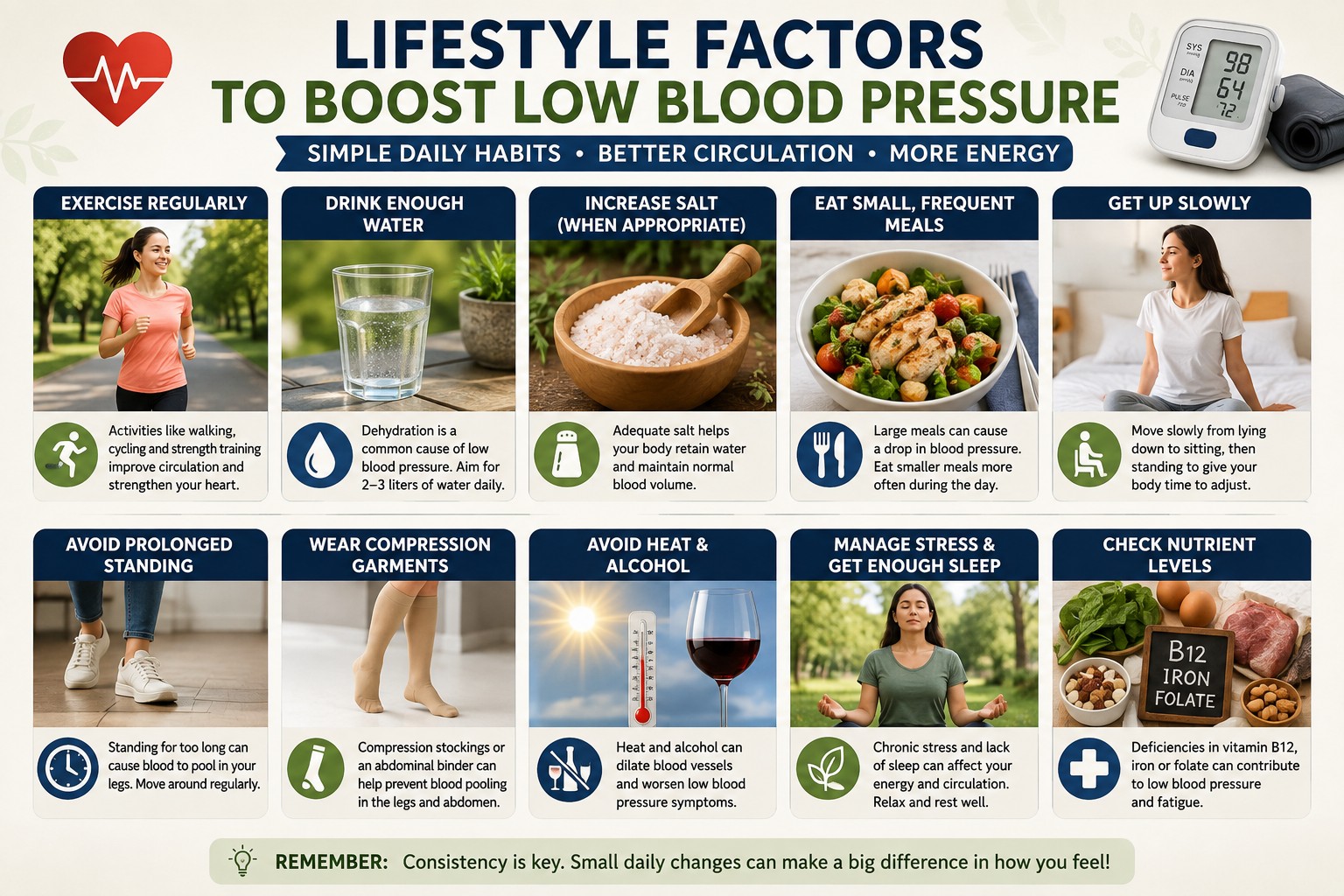
Maintain Good Hydration
Drinking enough water is one of the simplest and most helpful measures. Adequate fluid supports blood volume, which is why the NHS recommends increasing water intake when low blood pressure is causing symptoms.
For someone affected by postural hypotension first thing in the morning, drinking a large glass of water before leaving bed may be useful. Fluid lost through heat, exercise, vomiting or diarrhoea also needs to be replaced.
Drinking 350–500 ml of water fairly quickly can temporarily raise blood pressure, especially when dizziness occurs after standing. The effect may begin within 5–10 minutes and last for one or two hours.
Ensure Sodium Intake Is Adequate
For people who can safely consume more healthy salt, a cup of vegetable broth, a few olives or a moderately salted meal may help the body retain water and maintain blood volume.
Sea salt is suitable if preferred, but there is no need to attribute its effect to trace minerals. Sodium is the principal active component in this situation.
Salt should not be increased indiscriminately, particularly when heart or kidney disease, swelling, hypertension at other times or relevant medication is involved.
Sodium helps retain water and maintain circulating blood volume. A moderate increase in salt may therefore reduce symptoms in some people with postural hypotension.
Regular Movement and Exercise
Walking, cycling, swimming and resistance exercise can improve cardiovascular fitness. Stronger calf and leg muscles also assist the return of blood towards the heart.
When dizziness begins, simple muscle-pressure techniques may provide temporary help. These include:
• tightening the muscles of the legs and buttocks
• crossing the legs and squeezing them firmly together
• performing several calf raises
• gently marching on the spot
These actions encourage blood to move back towards the heart and brain. Similar counter-pressure manoeuvres are recommended in NHS specialist guidance for postural hypotension.
Consistent, moderate activity is more valuable than occasional exhausting exercise.
Change Position Gradually
Moving in stages gives the circulation time to adjust:
Lie down → sit upright → pause briefly → stand slowly.
Moving the feet, flexing the ankles and contracting the calf muscles before standing may offer further protection against a sudden fall in blood pressure.
Choose the Right Foods
Smaller meals are generally better than very large ones. Large portions of white bread, white rice, sweets, cakes or sugary drinks can cause blood pressure to fall after eating.
Meals containing beans, lentils, tofu, nuts, seeds, vegetables and whole grains release energy more gradually and may reduce this effect.
After heavy sweating, vomiting or diarrhoea, water together with sodium and other electrolytes can restore blood volume more effectively than plain water alone.
Avoid Things That Lower Blood Pressure Further
Alcohol, prolonged hot showers, hot baths, saunas and very warm rooms widen blood vessels and may make hypotension worse.
Some popular natural products can also lower blood pressure. These include hibiscus tea, beetroot juice, celery juice, large amounts of garlic, hawthorn, L-arginine, high-dose magnesium and Coenzyme Q10.
Although these remedies may be useful for hypertension, they may be unsuitable for someone already struggling with low blood pressure.
Nutritional Supplements & Herbal Remedies
Correct Vitamin and Mineral Deficiencies
Low blood pressure may sometimes be caused or worsened by nutritional deficiencies.
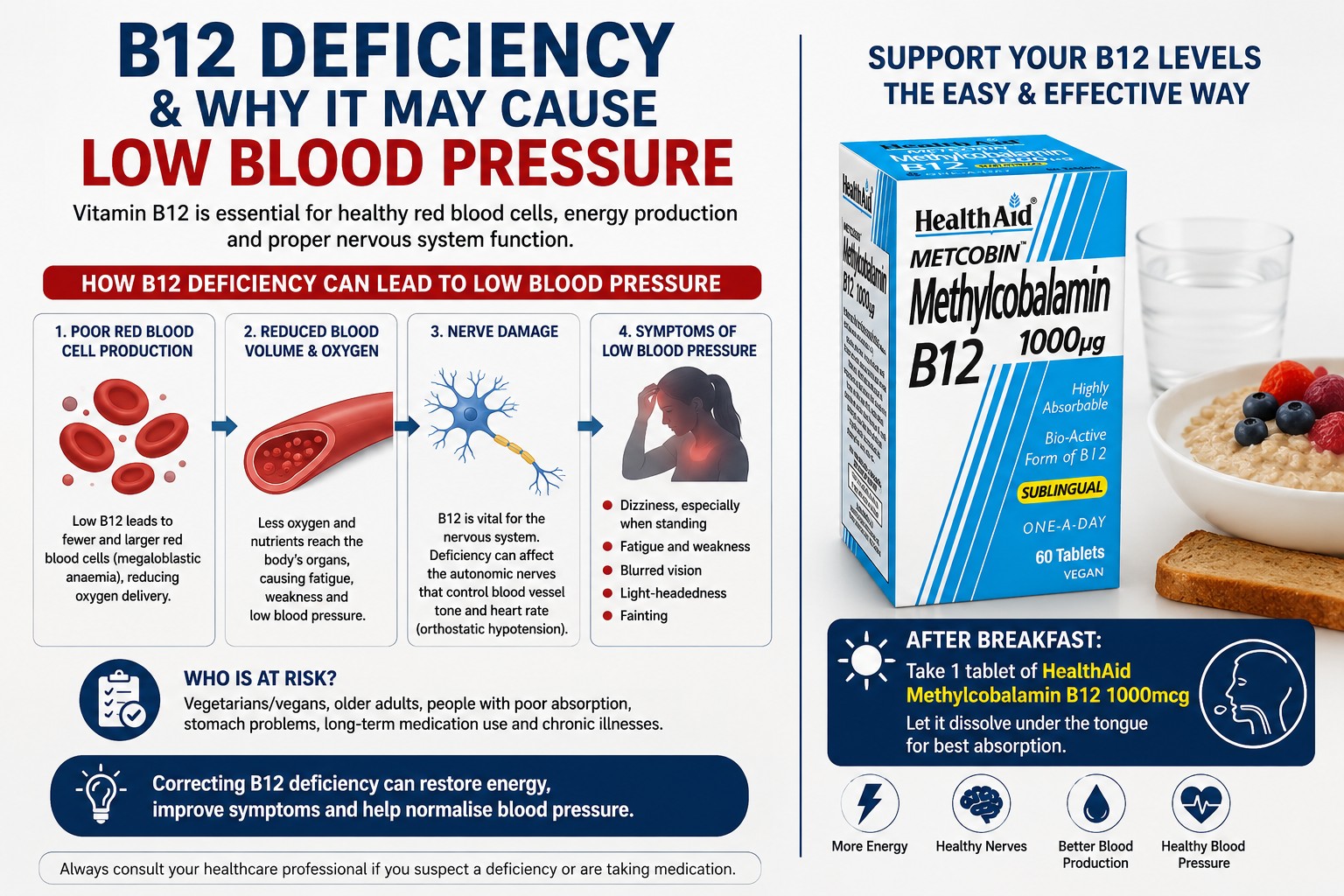
Vitamin B12 is particularly important because deficiency can cause anaemia and interfere with the nerves that control blood pressure. Published cases show that treating B12 deficiency can completely resolve severe postural hypotension.
Iron and folate deficiencies can also cause anaemia, weakness, tiredness and dizziness. Testing is especially worthwhile when low blood pressure occurs with pale skin, breathlessness, extreme fatigue, numbness or tingling.
Vitamin D deficiency has also been associated with a greater risk of postural hypotension in older people, although taking vitamin D has not yet been proven to correct it directly.
Vitamin B12 and Postural Hypotension
Vitamin B12 deserves particular attention when a person feels tired, weak, dizzy or faint on standing. It is essential for healthy blood cells and nerves.
A deficiency may cause anaemia, but it can also impair the autonomic nervous system that normally constricts blood vessels and stabilises blood pressure after standing.
In a controlled investigation involving 21 patients with vitamin B12 deficiency, researchers found abnormal blood-pressure regulation and concluded that B12 deficiency should be considered when assessing orthostatic hypotension.
Several clinical reports illustrate the potential improvement when deficiency is the true cause:
• A 90-year-old woman experienced almost daily dizziness and a marked drop in blood pressure when standing. Her symptoms improved substantially after she began taking 1,000 micrograms of sublingual vitamin B12 each day.
• A 27-year-old man with profound B12 deficiency and hypotension recovered normal blood pressure within two weeks of B12 replacement.
• A French medical report described severe orthostatic hypotension that resolved rapidly and completely following B12 treatment.
Could Korean Ginseng Help?
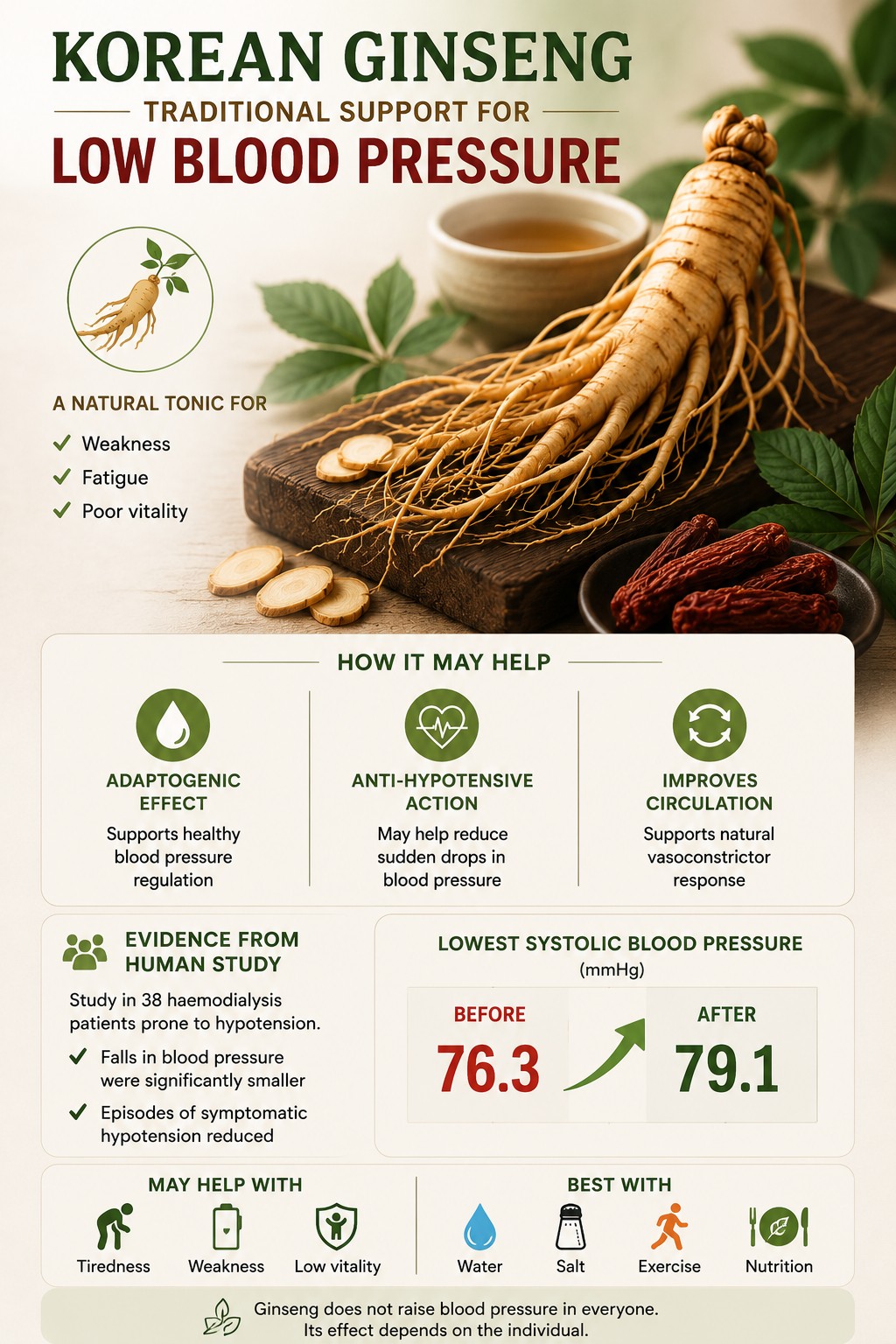
Korean ginseng (Panax ginseng) has a long history of use as a tonic for fatigue, weakness and low vitality. Research also suggests that certain preparations may support blood-pressure regulation in some people prone to hypotension.
Ginseng is often described as adaptogenic because its effect does not appear to be a simple, predictable rise or fall in blood pressure.
Scientific reviews have reported both blood-pressure-lowering activity and an antihypotensive effect—meaning protection against abnormally low blood pressure. The result may depend on the preparation, dose and a person’s existing cardiovascular condition.
One human study followed 38 haemodialysis patients who repeatedly experienced substantial falls in blood pressure during treatment.
Following Korean red ginseng supplementation, the reduction in blood pressure became significantly smaller and symptomatic episodes occurred less often.
The researchers found evidence of an improved natural vasoconstrictor response, which could help the body resist an abrupt fall in blood pressure.
Reviews have also discussed earlier findings suggesting that Panax ginseng may help move unusually low blood pressure towards a more normal level.
For a person whose low blood pressure is accompanied by tiredness and weakness, Korean ginseng may therefore be worth considering after addressing hydration, appropriate salt intake, physical activity and nutritional deficiencies.
Liquorice Root
Real liquorice root (Glycyrrhiza glabra) is one of the few herbs known to raise blood pressure. It contains glycyrrhizin, which helps the body retain sodium and water.
In one published case, a man with severe postural hypotension increased his standing blood pressure from 90/60 to 130/80 mmHg within seven days of using liquorice. A recent scientific review also confirmed that glycyrrhizin can raise both systolic and diastolic blood pressure.
Liquorice tea or a standardised liquorice-root supplement may therefore help some people with persistent low blood pressure.
DGL liquorice will not raise blood pressure because the glycyrrhizin has been removed.
Other Traditional Herbs
Chinese, Japanese and Russian sources commonly recommend astragalus, codonopsis, schisandra and Rhodiola for low blood pressure accompanied by weakness or exhaustion.
Is Coffee a Good Remedy?
Caffeine can cause a short-lived increase in blood pressure, so coffee may appear to solve the problem temporarily. It is not, however, a reliable long-term treatment.
With regular use, the body develops tolerance, while excessive caffeine can contribute to:
• palpitations
• anxiety and nervousness
• disturbed sleep
• headaches
• digestive irritation
• dependence and withdrawal symptoms
Needing coffee or energy drinks repeatedly just to function may hide tiredness without correcting dehydration, anaemia, poor sleep, medication effects or another underlying cause.
Sources
- NHS. Low blood pressure (hypotension).
- NICE. Orthostatic hypotension due to autonomic dysfunction.
- Cambridge University Hospitals. Postural hypotension.
- Wessely S, Nickson J, Cox B. Symptoms of low blood pressure: a population study. BMJ.
- Ganjehei L et al. Orthostatic hypotension as a manifestation of vitamin B12 deficiency. Texas Heart Institute Journal.
- NICE. Postural hypotension in adults: fludrocortisone.
- Komishon AM et al. The effect of ginseng on blood pressure: a systematic review and meta-analysis. Journal of Human Hypertension.
This article is provided for educational purposes and is not intended to diagnose or treat a medical condition or replace advice from a qualified healthcare professional.
Persistent dizziness, fainting or unexplained low blood pressure should be medically investigated. Increasing salt intake or using supplements may be unsuitable for some people, especially those taking medication or living with heart or kidney disease.